Digital marketing used to focus heavily on traffic. The goal was simple: bring as many visitors as possible to a website and hope some of them convert.
Today, that approach no longer works.
In modern digital marketing, success depends on understanding customer intent—the real reason someone searches online, clicks an ad, or interacts with content. Businesses that focus only on keywords and traffic numbers often miss the deeper motivation behind a user’s actions.
Understanding intent allows marketers to deliver the right message at the right moment, creating better experiences and significantly higher conversion rates.
What Is Customer Intent?
Customer intent refers to the purpose behind a user’s search or online behaviour.
When someone types a query into a search engine or asks a question in an AI-powered search assistant, they are trying to solve a problem or achieve a goal.
For example:
- A user searching “what is AI SEO” is likely researching a concept.
- Someone searching “best AI SEO agency London” is much closer to making a business decision.
- Another user asking “how to improve website visibility in AI search” is exploring solutions.
While these queries might look similar, the underlying intent is completely different.
Modern marketing strategies must recognise these differences and respond with tailored content and messaging.
Why Customer Intent Matters More Than Ever
The rise of AI-powered search and conversational platforms has changed how people discover businesses online.
Search engines and AI systems now analyse context, behaviour patterns, and historical data to determine what users actually want—not just the words they type.
This means marketing strategies must move beyond traditional keyword targeting.
Instead of asking:
“What keyword should we rank for?”
Businesses should ask:
“What problem is our customer trying to solve?”
This shift is at the core of modern strategies such as AI SEO, where content is structured to answer real user needs rather than simply match keywords.
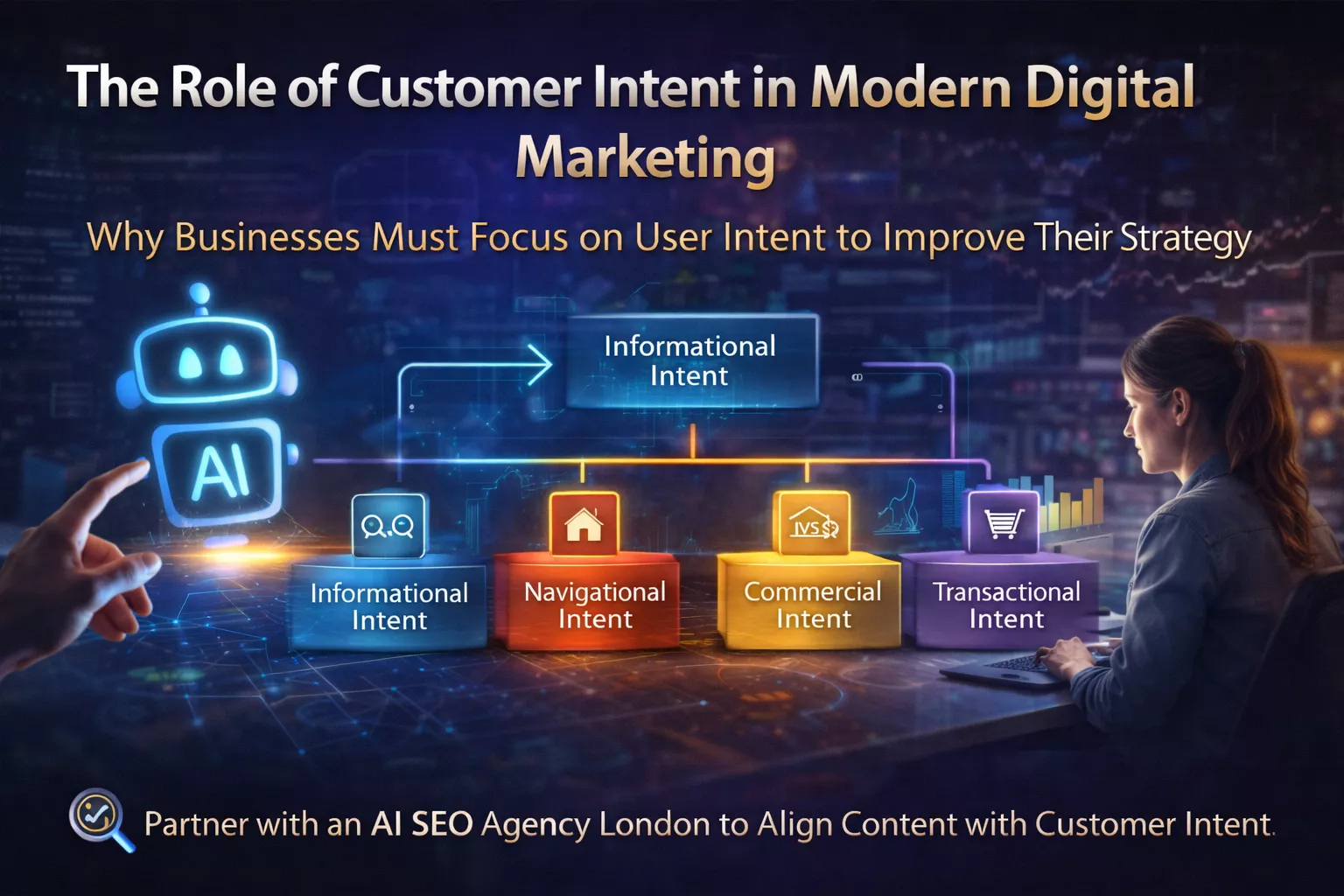
The Four Main Types of Customer Intent
Understanding intent becomes easier when we break it down into categories.
Informational Intent
Users are looking for information or learning about a topic.
Examples include:
- What is AI SEO
- How AI search works
- Benefits of digital marketing strategy
Content such as blog posts, guides, and educational resources work best here.
Navigational Intent
Users already know the brand or platform they want to visit.
Examples include:
- Dotsquares digital marketing services
- AI SEO agency London website
Here, strong brand visibility and clear website structure are essential.
Commercial Intent
Users are comparing options before making a decision.
Typical searches might include:
- Best digital marketing agencies in London
- AI SEO agency London reviews
- SEO services vs AI SEO strategies
Comparison content, case studies, and testimonials help guide users at this stage.
Transactional Intent
Users are ready to take action.
Examples include:
- Hire AI SEO agency London
- Request digital marketing consultation
- SEO services pricing
This stage requires strong calls-to-action, landing pages, and clear service messaging.
How AI SEO Aligns with Customer Intent
AI-driven search systems prioritise content that answers questions clearly and demonstrates authority on a topic.
This is why AI SEO focuses heavily on intent rather than just keyword placement.
AI search engines analyse:
- Context of the search
- User behaviour patterns
- Topic authority of a website
- Content quality and relevance
When content aligns with user intent, AI systems are more likely to surface it in search results or cite it in AI-generated answers.
For businesses working with an experienced AI SEO agency London, this approach helps ensure that content strategies reflect how modern search engines actually interpret information.
How Businesses Can Use Customer Intent in Their Marketing Strategy
- Map the Customer Journey
Every user passes through different stages before making a decision.
Content should support each stage:
- Awareness content
- Educational resources
- Comparison guides
- Conversion-focused pages
- Create Problem-Solving Content
Instead of producing generic blog posts, focus on answering real questions customers ask.
AI search systems favour content that provides clear solutions.
- Align SEO, PPC, and Content Strategy
Customer intent should guide all digital channels.
For example:
- SEO targets informational and commercial intent.
- Paid ads capture transactional intent.
- Content marketing builds authority across all stages.
- Use Data to Understand Behaviour
Analytics tools help identify:
- Which queries drive conversions
- Which pages generate engagement
- Where users drop off in the funnel
These insights allow businesses to refine their intent strategy.
Why Customer Intent Is the Future of Digital Marketing
Marketing is no longer about broadcasting messages to a broad audience.
It is about understanding exactly what people need at each moment and delivering content that helps them move forward in their decision-making process.
Companies that embrace intent-driven strategies—supported by technologies like AI SEO—gain a major competitive advantage.
They attract more qualified traffic, improve conversion rates, and build stronger trust with potential customers.
Work with an AI SEO Agency in London
If your current marketing strategy focuses only on keywords and rankings, you may be missing valuable opportunities to connect with customers at the right stage of their journey.
Partnering with a specialised AI SEO agency London can help your business develop a smarter approach that combines customer intent analysis, AI-driven optimisation, and strategic content planning.
At DotSquares, our digital marketing experts help businesses align their SEO, content, and advertising strategies with real user intent to drive measurable results.
Get a Free Digital Marketing Strategy Audit
Want to know if your website is aligned with modern AI-driven search?
Our team will review:
- Your SEO and AI SEO strategy
- Content structure and topic authority
- Customer intent alignment
- Opportunities to improve lead generation
Start building a strategy that attracts the right customers—not just more traffic.
