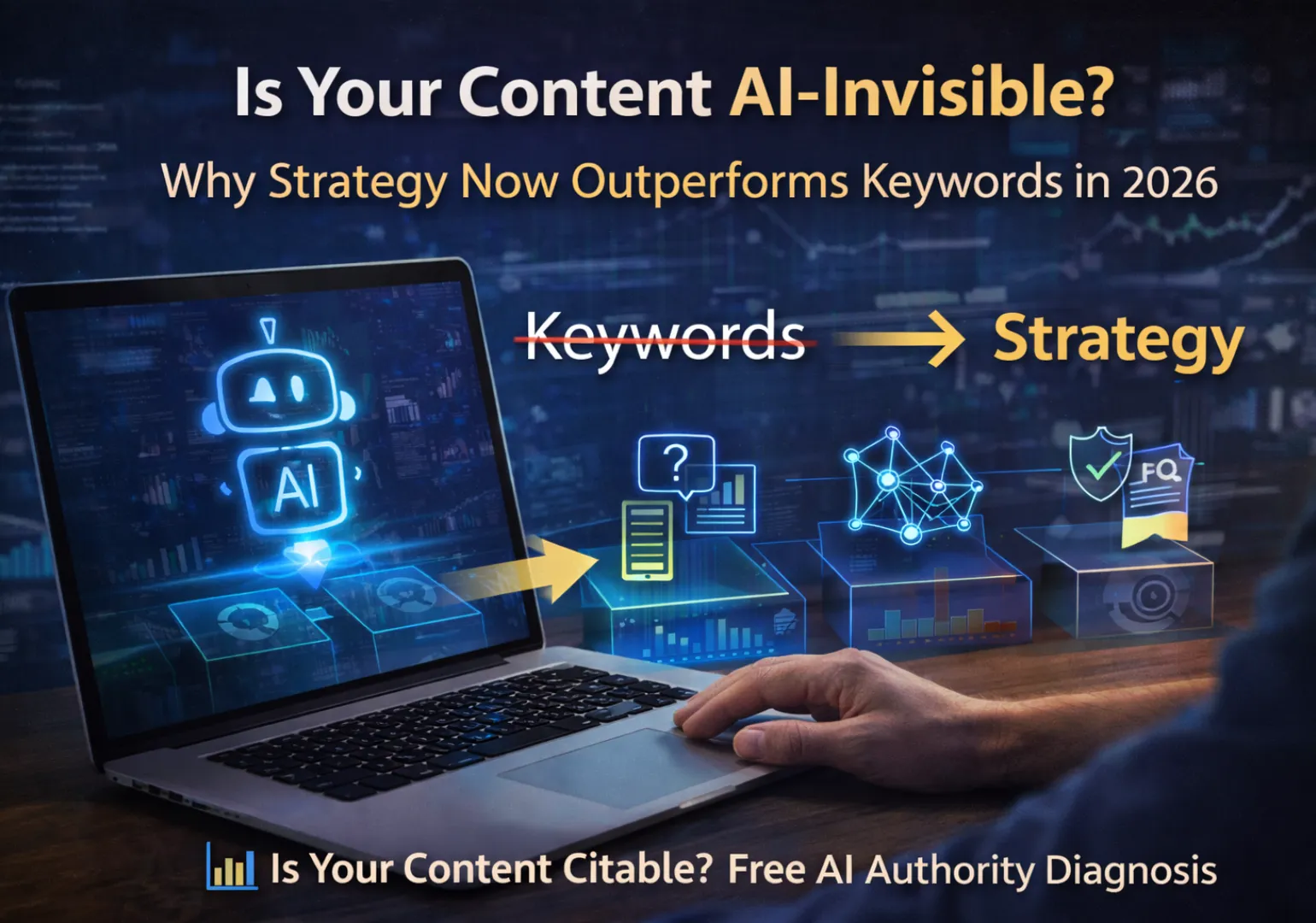
The Silent Decline of Keyword-First SEO
For years, digital marketing revolved around keywords.
Marketers researched phrases, optimized pages around exact matches, and measured success by ranking positions. When search engines relied heavily on word matching, this approach worked.
But in 2026, discovery looks very different.
Generative AI platforms — from conversational assistants to AI search experiences — don’t prioritize keywords the way traditional engines did. Instead, they evaluate meaning, authority, and contextual relevance.
If your content strategy still focuses only on keyword density, the risk isn’t just lower rankings — it’s becoming invisible within the AI-driven ecosystem that increasingly influences buying decisions.
Free AI Authority Check: Is Your Content Citable?
AI assistants don’t simply list links — they reference trusted sources.
If your content lacks depth, originality, or structure, AI systems may skip over your brand entirely.
Request a Free AI Authority Scan to see whether your content is ready to be cited in AI-generated answers.
AI Doesn’t Read Keywords — It Evaluates Authority
Modern AI models analyze content through patterns of expertise rather than isolated phrases. Instead of asking, “Does this page contain the keyword?” they evaluate signals like:
Depth of coverage — Does the content anticipate follow-up questions and provide meaningful explanations?
Topical context — Is this brand consistently publishing within a clear area of expertise?
Human insight — Does the content offer unique perspective or practical knowledge beyond surface-level summaries?
Ranking for a broad phrase like “digital marketing services” is no longer enough. AI systems prefer brands that demonstrate strong topical authority through interconnected content, original insights, and consistent educational value.
In today’s search environment, expertise matters more than repetition.
The Shift from Matching Words to Solving Problems
Traditional SEO asked one main question:
Which keyword should this page target?
AI-driven discovery asks something different:
What problem does this brand help solve — and how well do they explain it?
When users interact with AI search, the system interprets intent and identifies reliable entities capable of providing answers. This is why some brands appear frequently in AI responses even when they aren’t ranked first in classic search results — their content strategy signals deeper credibility.
Building an AI-Ready Content Ecosystem
Staying visible in 2026 requires moving beyond isolated blog posts toward a structured knowledge ecosystem.
Shift From Random Blogs to Topic Clusters
Instead of publishing standalone articles, build clusters around core themes. Combine guides, comparisons, insights, and case studies that reinforce each other and strengthen authority signals.
Optimize for Conversational Intent
Structure content in clear sections that answer real questions. AI systems favor content that is easy to extract, understand, and summarize.
Focus on Information Gain
Content that simply repeats common advice rarely stands out. AI platforms reward new insights, original data, and real-world examples — especially when tied to your agency’s experience.
Strengthen Trust Signals
Real expertise matters. Highlight authorship, link to credible resources, and include genuine examples or testimonials that demonstrate authority beyond theory.
The Risk of Staying Keyword-Focused
Many businesses still produce large volumes of keyword-driven content believing that more pages equal more visibility.
In the AI era, that approach can weaken authority.
Warning signs include:
• Articles optimized for phrases but lacking meaningful insight
• Content written for algorithms rather than real readers
• Weak internal linking that prevents AI systems from understanding your site structure
Without a strategic framework, even well-written content can struggle to gain traction in AI search.
Final Thoughts: Strategy Is the New SEO
Keywords still matter — but they are no longer the foundation of discovery.
As AI continues to reshape how users find information, successful brands will be those that invest in strong content strategy, clear expertise, and meaningful problem-solving.
Visibility today comes from being understood — not just indexed.
